
Accessibility isn't optional anymore: captions for live video
Live captions from the host mic turn one stream into something more people can follow—and keep up with later.
Live captions from the host mic turn one stream into something more people can follow—and keep up with later.
Live relationships form in real-time chat, not post-stream comments. Here’s why multistreamers treat unified chat as the real audience layer.
Live shopping works when product cards, a goal bar, and Stripe tracking sit inside the stream—not bolted on after.

A live show dies fast unless you plan the second life: recordings, short clips, and a podcast draft from the same stream.

One platform means one audience. Server-side fan-out keeps your upload lean and your second machine free.
A browser studio can replace the control room, switcher, and second operator—if you treat production as a solo system, not a missing crew.

One live show can feed clips, a podcast episode, and vertical cutdowns for weeks—if you design the capture, not the scramble.

Landscape still owns the main stage. Portrait owns discovery. Here's how to run both without rebuilding your whole show.

Worship, classrooms, and city halls—not gaming setups—are carrying weekly livestream volume. Here's what that quiet majority actually needs.

Live used to mean a studio budget. Multistreaming dropped the cost of showing up live across platforms to near zero—and businesses noticed.
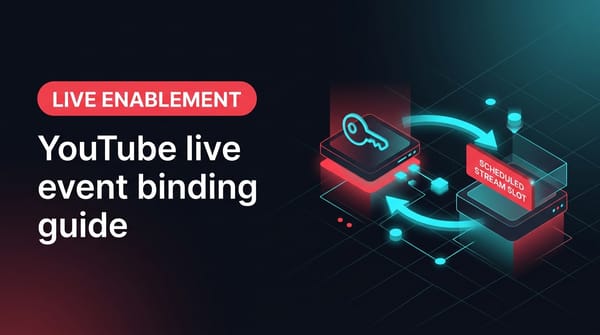
Enablement, scheduled events vs instant broadcasts, and broadcast binding decide YouTube Live success more often than the encoder does.

Single-platform live streaming is now a niche strategy. See how audience fragmentation drove production tooling toward server-side fan-out.